A Newbie to Project Kuyenda:
Finding My Feet In Mzuzu
Clair Clark, Anaesthetist
Clair has joined the Project Kuyenda team for the first time this year and below describes her experience joining the team in the early stage of the visit.
I first became aware of the work of Project Kuyenda (PK) through a post on social media. What caught my attention was the scale of the challenge and, more importantly, the approach PK was taking to address it.
The work being done in Malawi was clearly important. At the time, orthopaedic services for a population of around four million people were being led by just one orthopaedic surgeon. Historically, the hospital had also had no doctors formally trained in anaesthesia, with anaesthetic services delivered entirely by clinical officers.
For those unfamiliar with the Malawian healthcare system, clinical officers are highly skilled, non-physician healthcare professionals who undertake several years of clinical training. They play an essential role in delivering medical and surgical care, often taking on responsibilities that would traditionally fall to doctors in other healthcare systems. They are very much a backbone of healthcare provision in Malawi, particularly in settings where doctors and specialists are in short supply.
What appealed to me about PK was that its ambitions seemed to extend well beyond simply arriving, providing a surgical service and getting through a list of cases. There was a real emphasis on education, developing local skills, providing much-needed equipment and supporting the wider healthcare team. The recognition that sustainable improvements come from investing in people and systems, rather than simply delivering a short-term service, was something I found particularly attractive.
I also liked the idea of working alongside local colleagues, learning how they deliver care within the resources available to them and hopefully contributing something useful in return. There is something quite compelling about being part of a project that recognises that improving healthcare is about much more than the individual patient on the operating table. It is about building confidence, sharing knowledge, supporting other professionals and leaving something behind that continues to make a difference long after the visiting team has gone home.
And so, here I am: a newbie to PK.
Getting to Mzuzu
Our arrival in Malawi was relatively smooth, once we had negotiated a series of repeated customs checks with our almost half-tonne of luggage. Some might say the flights were the easy part.
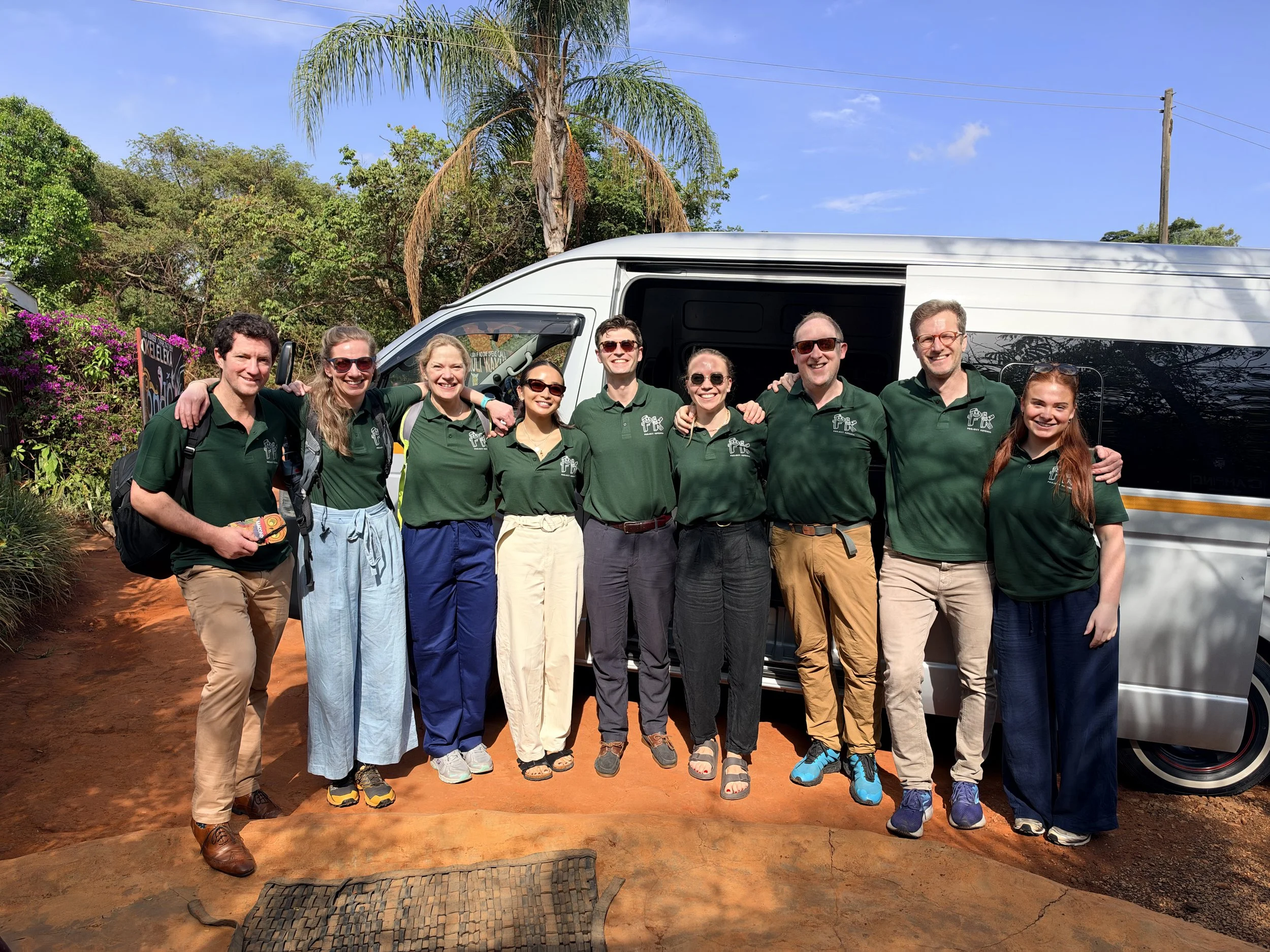
I had been warned that the bus journey from Lilongwe to Mzuzu would be long and potentially uncomfortable, depending on the state of the roads. Seven hours, one broken-down bus and several rather painful encounters with some particularly vicious speed bumps later, we eventually limped into our accommodation at Macondo Camp.
It's beautiful. The first thing that struck me was the soundtrack: an almost constant chorus of insects and birds, quite unlike anything I was used to at home. Combined with the wonderfully warm welcome we received, it was a pretty lovely introduction to life in Mzuzu.
First Impressions of Mzuzu Central Hospital
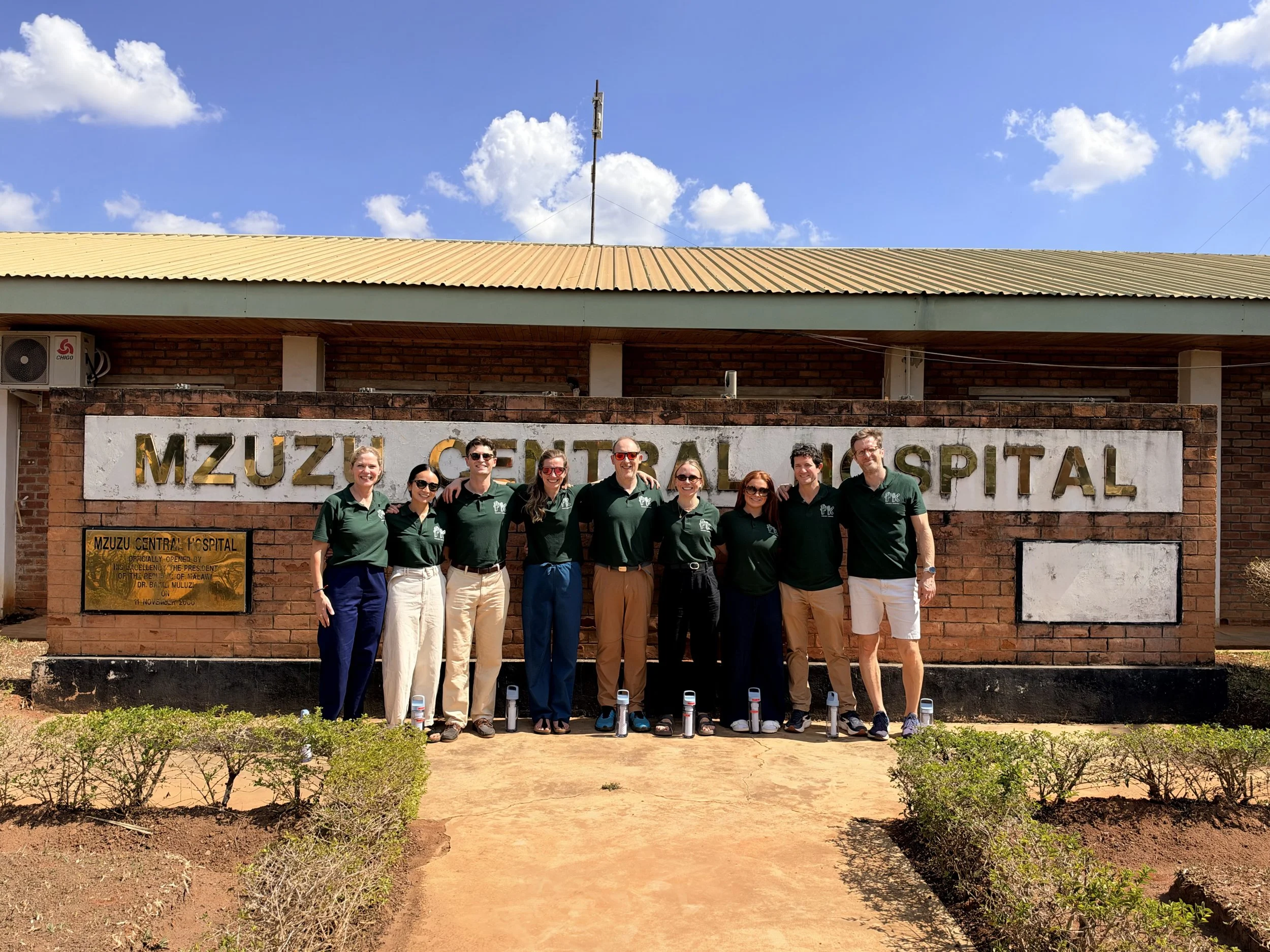
A hearty breakfast kicked off our first clinical day before a short 30-minute journey through the bustling streets of Mzuzu brought us to Mzuzu Central Hospital.
As one of Malawi's four central referral hospitals, Mzuzu Central serves the Northern Region, providing specialist services and receiving patients referred from district hospitals and other healthcare facilities across the region. It is a busy and important centre for healthcare provision, with a huge responsibility to deliver care to a large and geographically diverse population.
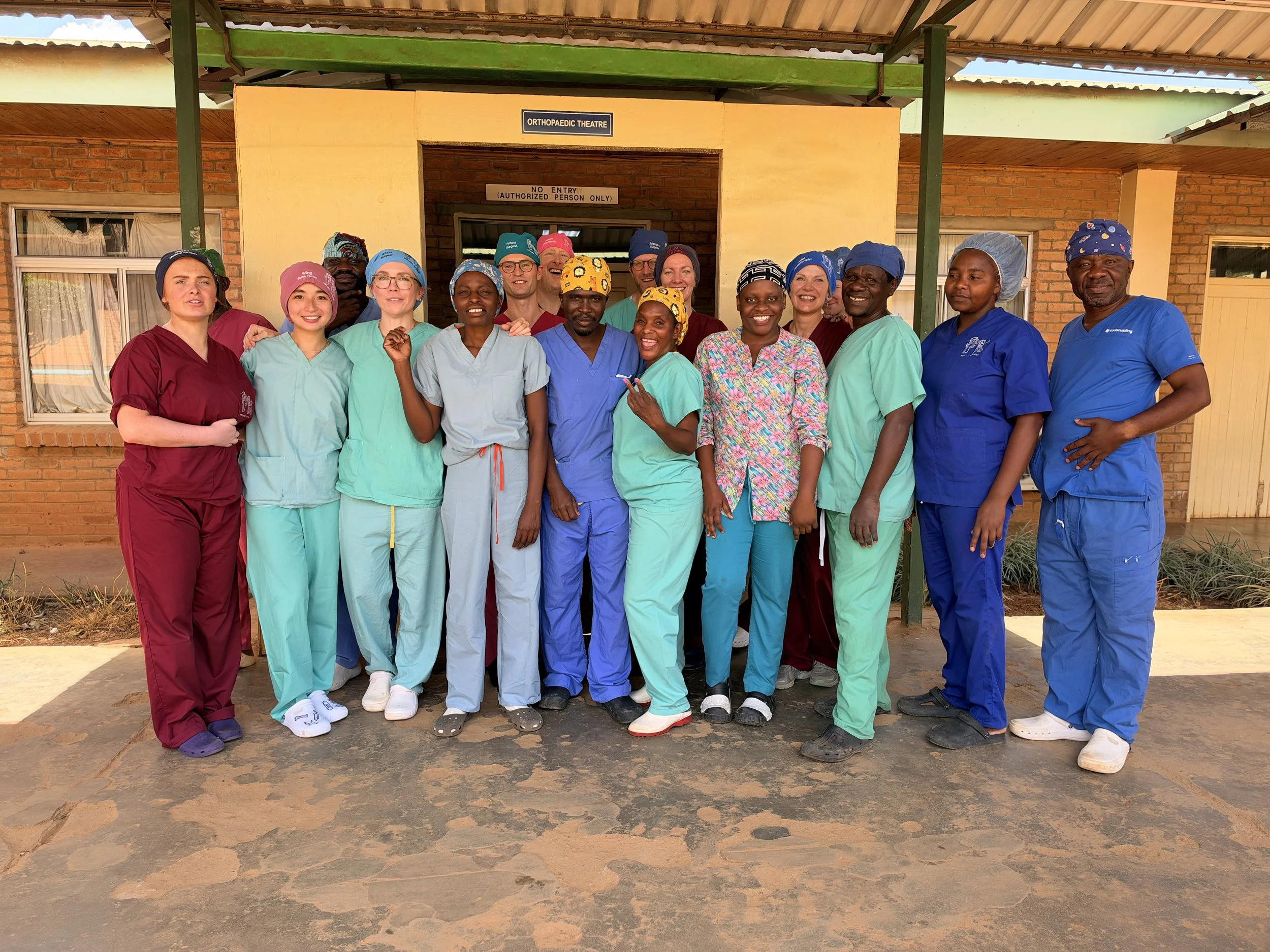
We were warmly welcomed by the team and, following some brief introductions for us newbies, headed off to review the inpatients and start planning the workload for the week ahead.
Having worked in a similar environment some years ago, the bustling, busy wards were almost exactly what I had expected: a series of relatively small rooms, crammed with 12 or more patients and their relatives, occupying a variety of beds and cots. It was hot, noisy and full of activity, with plenty of curiosity about the new faces wandering around.
The patients and their families were incredibly friendly, smiling and engaging in conversation, often with the help of the local nursing staff who could assist with translation.
Some of the injuries were quite unlike anything we would routinely encounter at home. Fractures that had occurred months previously and healed poorly, significant crush injuries, burns and established infections. I was particularly struck by the stoicism of people here. One patient, for example, sat quietly on her bed with an exposed tibia and an external fixator (E-fix) in situ, seemingly quite uncomplaining as she waited to hear what the plans might be for her surgery.
The paediatric ward was perhaps even more chaotic, but remarkably, not a single child was crying.
It was a real reminder that life is different here. People face challenges and circumstances that are difficult to comprehend from the comfort of our own healthcare systems. There is an incredible resilience among patients and families, although I was equally aware that what might look like stoicism from the outside can also reflect the very different realities of accessing healthcare and living with illness or injury.
Learning from the Team
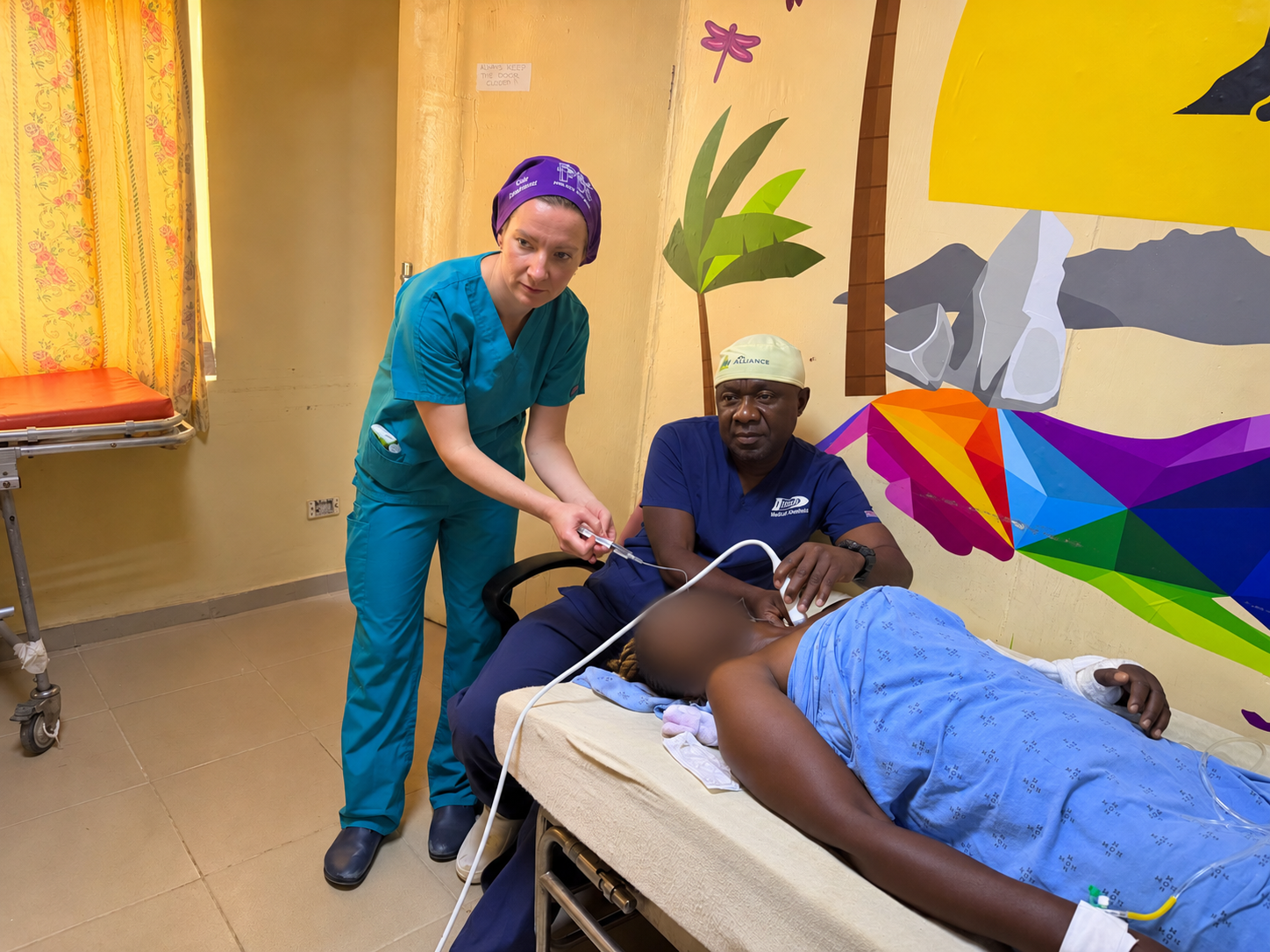
Over the following days, as we started working through the theatre cases, I became increasingly comfortable with the theatre set-up and spent more time getting to know the fantastic anaesthetic clinical officer, Michael.
Michael is, quite simply, the person holding up the anaesthetic component of the orthopaedic trauma service. He moves between two theatres, managing cases across all age groups, with almost everything performed under regional anaesthesia or ketamine.
He has developed an impressive ability to work with the resources available, and his technical skills, clinical judgement and efficiency are quite something to witness. In many ways, he has honed skills through necessity and experience that go well beyond what I would have expected to encounter, and certainly challenged some of my own assumptions about what can be achieved in a resource-limited environment.
There has already been some really valuable sharing of knowledge between us, alongside the delivery of some much-needed new equipment. Two new ultrasound machines will be a real game changer, particularly in making regional anaesthesia easier and more accessible.
One of the things that has surprised me most is just how efficient the theatre teams are. This is despite a comparatively under-resourced environment, where surgical instruments are hand-washed before being packaged and sterilised, patients often arrive with little or no formal pre-assessment, and even something as straightforward as a patient's name can be spelt several different ways across the paperwork.
Yet the staff are incredibly slick at turning patients around and getting cases completed. There is an impressive rhythm to the whole process, and a level of adaptability that is difficult not to admire.
My familiar anaesthetic machine, on the other hand, has been something of a different story. At present, its main function is probably best described as a rather expensive shelf. I did at least check that it would switch on and, after re-inserting what I can only describe as a garden hose into the oxygen cylinder, that it could deliver oxygen if needed!
The reality, however, is that general anaesthesia cannot currently be delivered reliably or safely using the available set-up, and this simply isn't a safe option for us. It is an important reminder that working in a different healthcare environment requires more than just bringing familiar equipment and techniques. It means understanding what is available, recognising limitations and being prepared to adapt accordingly.
Making a Difference That Lasts
As we settle into the work, the bigger task ahead is becoming clearer. It isn't simply about completing as many surgical cases as possible during our time here. It is about identifying where meaningful, sustainable improvements can be made.
That means listening to the people who work here every day, understanding the challenges they face and recognising the strengths that already exist within the system. It means considering where training, equipment, education and changes to practice might make a genuine difference, while being realistic about what can be maintained once we have returned home.
There is always a temptation to arrive with a list of things you think need changing. But perhaps one of the most important things about being part of PK is learning to take a step back, understand the environment and work alongside the local team rather than imposing solutions from elsewhere.
I suspect this will be one of the most valuable parts of the experience for me.
The People Make the Project
And, of course, I should probably have anticipated that when you throw together a group of people willing to travel for almost two days to spend an intense amount of time working and socialising together, friendships are going to form pretty quickly.
Evenings have become wonderfully sociable. We have beer-lates (Pilates, but with a bottle of beer) led by Rosy, delicious dinners and, more often than not, some form of post-dinner game that inevitably has us all roaring with laughter.
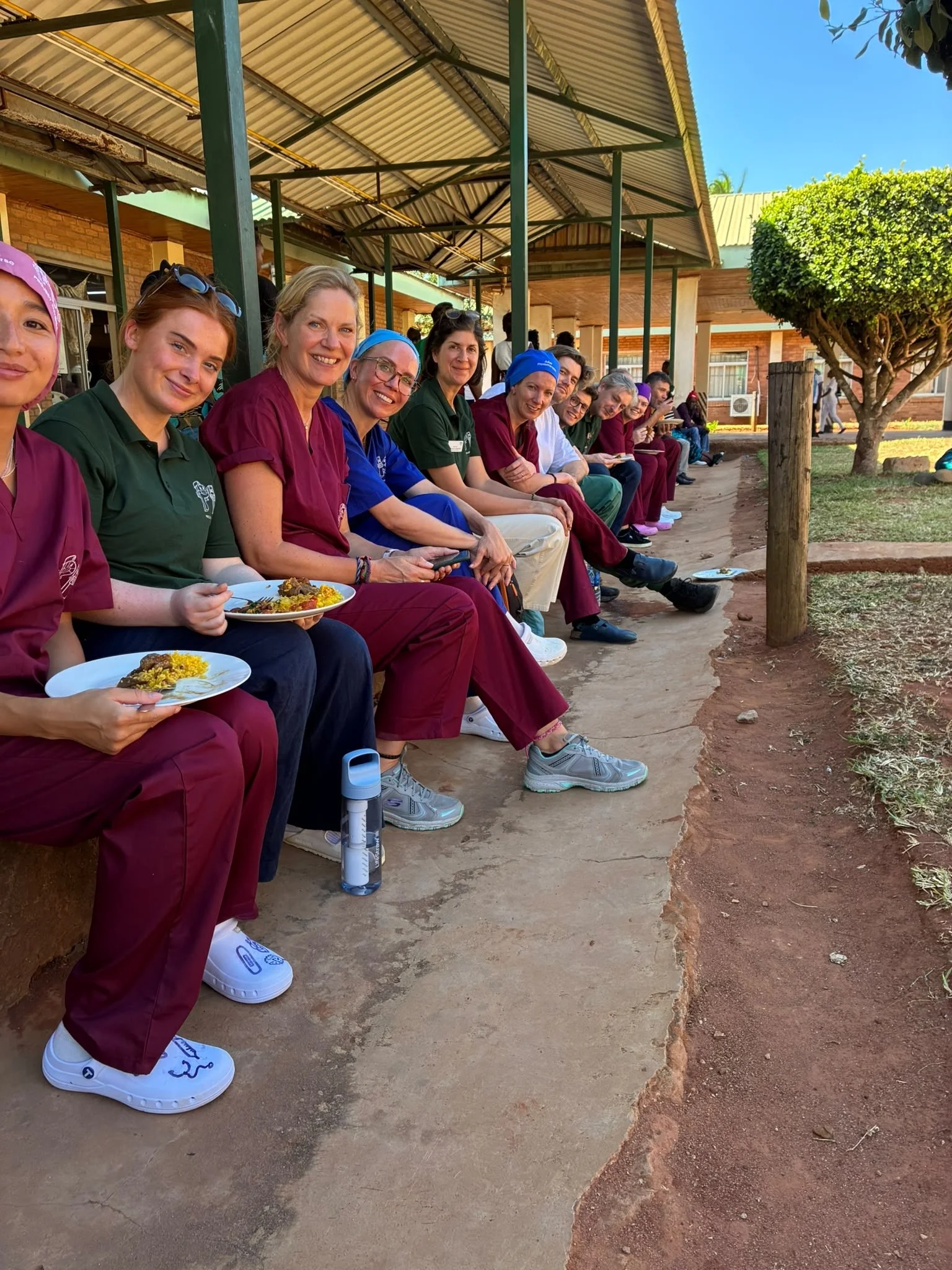
There is something quite special about spending time with a group of people who share a common purpose but also know how to have a good time. The days are busy, occasionally challenging and often exhausting, so these evenings are a welcome chance to unwind, laugh and get to know one another.
We generally retire to bed with full bellies and happy hearts.
I'm still very much finding my feet as a newbie to PK, and I suspect there is plenty more to learn over the coming weeks. But already, I'm struck by the generosity, resilience and resourcefulness of the people we are working alongside, and by the potential for this project to make a lasting difference.
It's early days, but I'm very glad I found that social media post.